

6 months later

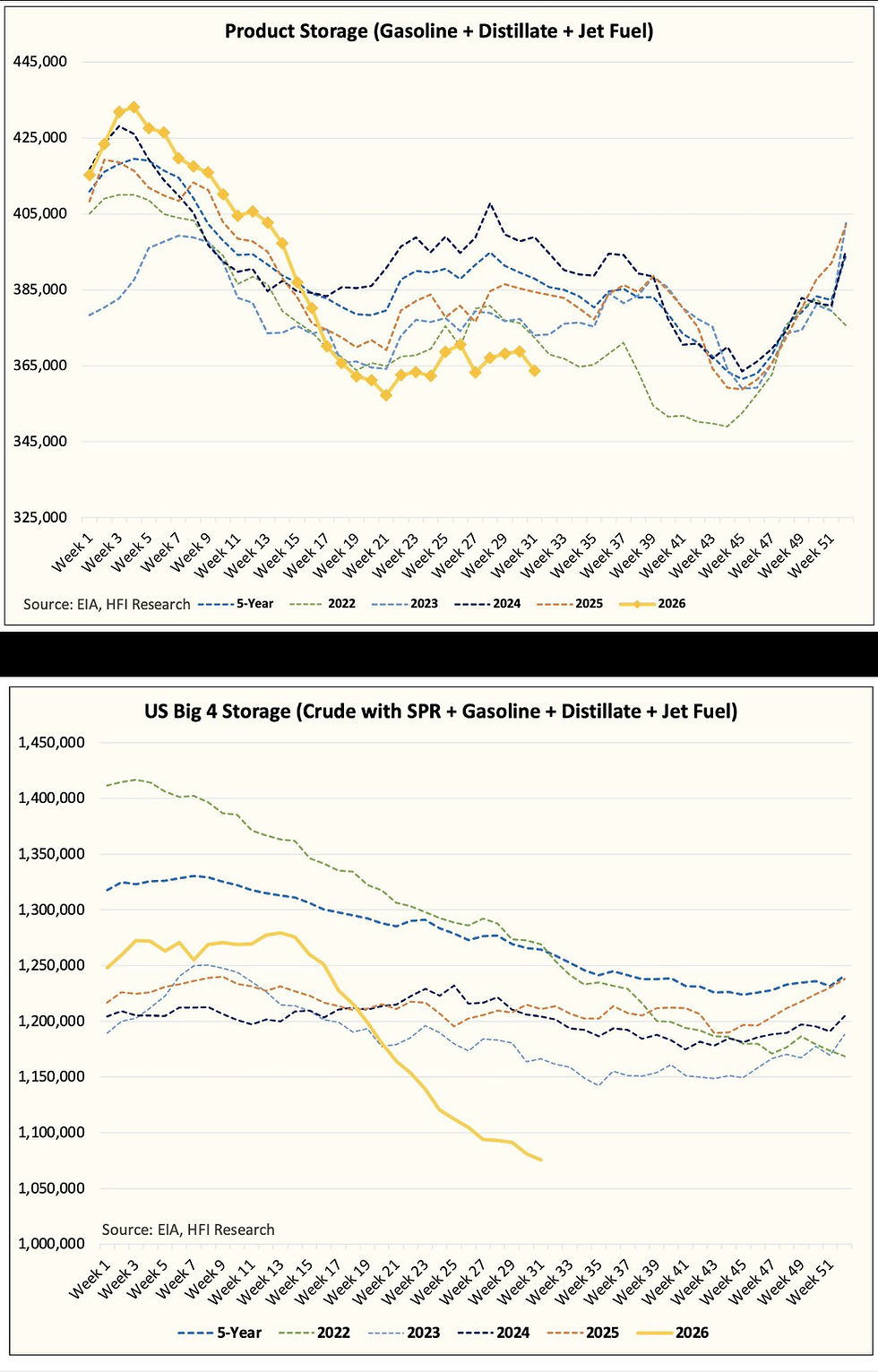
We are crossing the 6 month anyversaryvof the beggining of the Iranian conflict. It’s time to check where things actually stand with the global oil market. in the U.S., the SPR just hit its lowest level since 1983, around 305M barrels, less than half of the 714M-barrel capacity. It’s been drained repeatedly to blunt price spikes from the Iran war, and a chunk of what’s left reportedly can’t even be pulled quickly due to aging infrastructure. On the flip side, US crude production has stayed remarkably resilient — north of 13.7M bpd, showing the shale patch can still lean in when the world needs barrels. The ace in the sleeve, Venezuela, is starting to produce more oil than people realize. Since the US took control of Venezuela’s oil sector earlier this year, exports have climbed to a seven-year high (~1.2M+ bpd), with Chevron and other Western majors back in the game. Output is projected to reach 1.3-1.5M bpd by 2027. It’s become one of the few real supply offsets to the Hormuz disruption, alongside Brazil and Guyana. For Europe and Asia, IEA members (mostly OECD Europe, Japan, Korea) coordinated a historic 400M-barrel emergency release back in March — the largest in the agency’s history. China is the wildcard: estimated to be sitting on ~900M-1.4B barrels of combined strategic and commercial inventory, the deepest cushion of anyone. Beijing has largely relied on drawdowns rather than aggressive spot buying, which has actually helped keep a lid on prices. And finally, the Hormuz timeline: This is the part that matters most. About a fifth of global oil and LNG normally moves through the strait, and it’s been “effectively closed” on and off since February. Analysts have been blunt: even the full 400M-barrel IEA release only buys 20-40 days of cover against a total closure, and it takes ~13 days for a US SPR release to even reach the market. As of this week, Iran and Oman say they’ve agreed on a shipping-corridor deal in principle, but it’s awaiting sign-off, and a prior June agreement collapsed within weeks after vessel strikes resumed. Trump will not accept defeat, but that’s exactly what happened. Brent is sitting near $80, well off its April highs, but every failed diplomatic window has been a reminder of how thin the world’s real spare capacity is. Bottom line: reserves bought time, Venezuela and the Atlantic Basin bought supply, but Hormuz is still the single point of failure the whole market is watching.
Want to know more? You can register for free at Fund@mental.
#iamfundamental #soyfundamental #wealthmanagement #familyoffice #financialadvisor #financialplanning #policymistake #ratecut #stagflation


Comments