

Safe havens

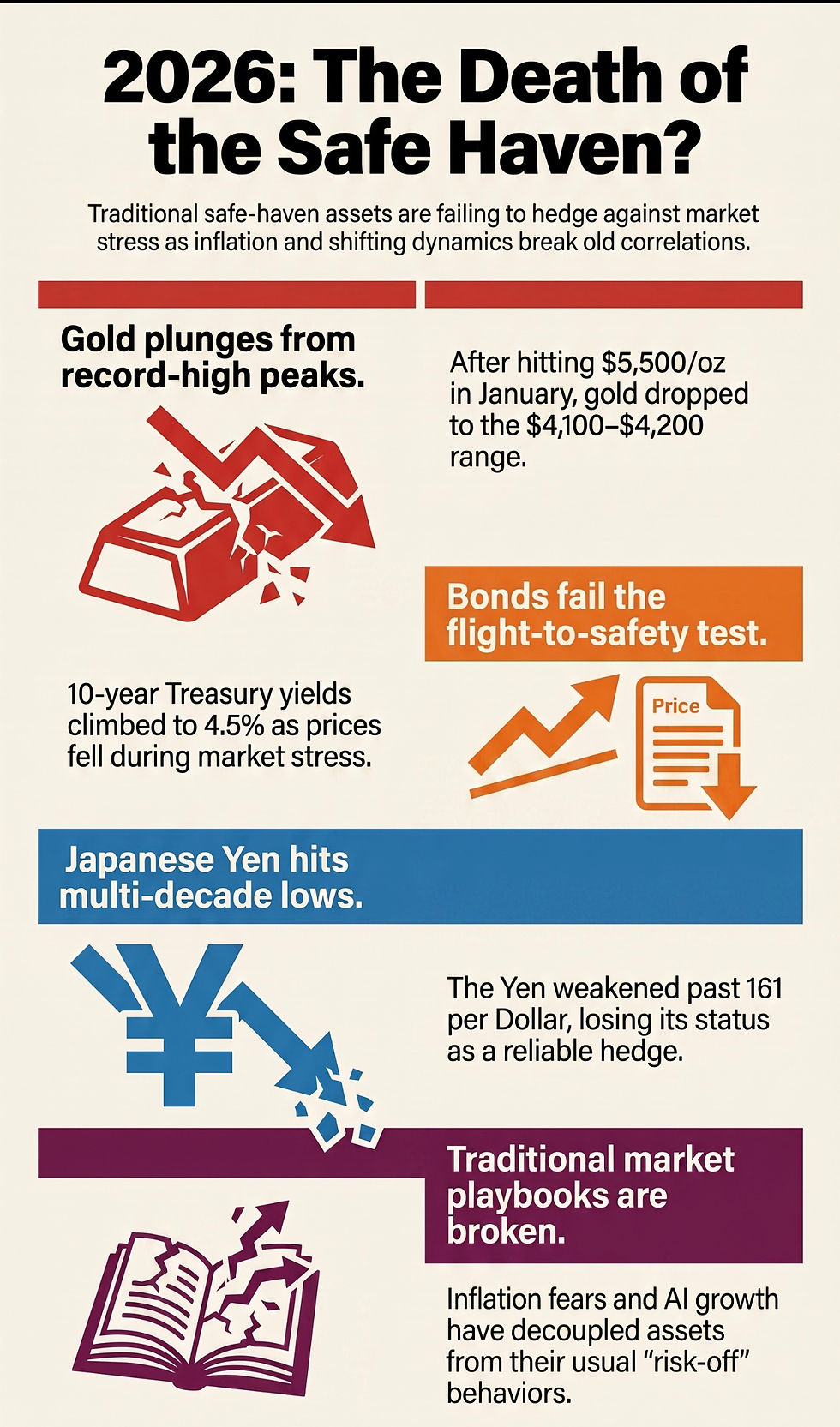
Safe haven assets have let investors down in 2026 so far. Treasuries, gold, and the Japanese yen are the classic go-to assets during market stress. In theory, they should rally (or at least hold steady) when equities wobble and geopolitical risks spike. This year, at least so far, that hasn’t happened. This isn’t a classic “risk-off” environment where everything flees to safety. Inflation worries, supply shocks (e.g., from Middle East developments), sticky prices, and strong performance in select risk assets like AI/tech have changed the playbook. Traditional havens are struggling while the usual correlations break down.
Investors are rethinking what “safe” really means in 2026. The dollar has shown some resilience in spots, but overall, the old rules aren’t applying cleanly. Diversification still matters, bit it’s increasingly difficult to achieve, while blind faith in the old havens is getting tested. It is true that safe havens cannot be judged by its behavior in the short run, but there have been plenty of opportunities this year to at least show signs of protection, and it hasn’t been the case. Perhaps we need to start building anti fragile portfolios as Nassim Taleb proposes, using options to protect against big events, instead of relying fully on safe havens.
Want to know more? You can register for free at Fund@mental.
#iamfundamental #soyfundamental #wealthmanagement #familyoffice #financialadvisor #financialplanning #policymistake #ratecut #stagflation


Comments